Bowling in Brooklyn

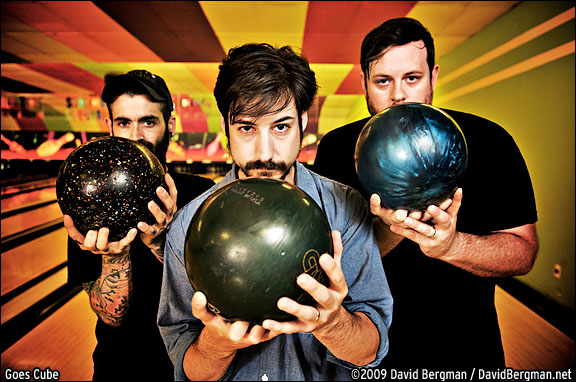
Last week, Kerrang Magazine assigned me to photograph Goes Cube for a feature article. Besides being a NYC-based rock/metal band, these three guys are avid bowlers. They actually travel with their own shoes and bowling balls and find lanes to play in each city when they’re on tour.

My assistant James Burger (check out his very cool stop motion video “intro-duck-tion”) and I spent the afternoon trying to throw strikes while making pictures in between frames.

Goes Cube
(Nikon D3, 14-24 lens, 1/125 sec, F/4, 1600 ISO. Two SB-900 strobes with shoot-through umbrellas.)

After shooting some action pics, I posed the guys for a quick portrait.

Goes Cube
(Nikon D3, 24-70 lens, 1/125 sec, F/4, 1600 ISO. Two SB-900 strobes with shoot-through umbrellas.)

For what it’s worth, I bowled a 106 and finished in third place (out of five). I guess I’ll stick with the photographic type of “frames.”

Orphan Works = Finders Keepers?

I try to keep this blog about photography and technique, but if you’re a photographer, writer, painter, or producer of any kind, you need to be aware of some legislation that is kicking around in Washington, DC.

It’s called orphan works and it could have a major impact on your business.

In the United States, every time you press the camera’s shutter you own the copyright to that image (unless you’ve signed a contract in advance stating otherwise). Many people who create intellectual property — including yours truly — make a living by licensing the use of their work to others. I make sure that my clients have all the usage they need, but I usually keep the right to license my photos in the future.

For example, I shot this photo in 2003 of fans celebrating at the Ohio State-Michigan football game for Sports Illustrated.

Ohio State vs. Michigan

Since then, the image has been licensed through my agency Corbis numerous times including a lucrative Fossil watch ad.

The copyright to my photographs is my property. It’s up to me to decide if and when I want to license it for commercial or editorial use. There may be times when I don’t want my images used in a particular way. For instance, I don’t allow my celebrity images to be used in tabloid publications. I also can negotiate a license with a client whereby the images from a shoot can’t be licensed by another company in the same industry for a certain amount of time.

Orphan works refers to work where the copyright holder can’t be found. The proposed legislation basically says that if the owner can’t be identified, then the work can be used without penalty. If the copyright owner comes forward later, the infringing party simply has to pay the going rate for the license and can continue to publish the photo.

The orphan works legislation is essentially saying, “Finders, keepers.”

It’s akin to finding a vacant lot and building my house there because I don’t know who owns the property. To stay with the analogy, if the land owner comes forward after I’ve already built the house, I simply have to pay him whatever the going rate would have been on the property. It doesn’t matter if the land wasn’t for sale or if the owner had already promised it to someone else. I would not face any fines or go to jail for stealing the property.

In the real world, if I want land for my house, I have to find property that’s for sale and buy it. The act of licensing photos is the same.

Seems pretty straightforward to me.

Last week during the World Copyright Summit, Sen. Orin Hatch (R-UT) said that he was actively pursuing the passing of orphan works legislation and may re-introduce the bill in the coming weeks. You can read more of his comments on John Harrington’s photo business blog.

Please let your Congressional representatives know that you oppose orphan works legislation.

Whether this bill passes or not, you should do everything possible to make sure that your images can be identified as your own. This includes embedding a copyright notice on the photo (as I did on the image above) and also making sure that your files have metadata stored in them with at least your name and contact information.

These steps aren’t difficult to implement into your workflow and will help to protect your rights for many years to come.

Going Green

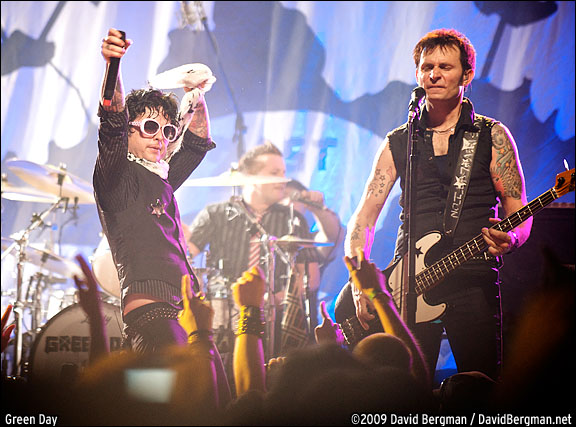
The last time I photographed Green Day in concert, they were playing in front of a sold-out crowd at Giants Stadium (capacity: 80,000).

Green Day

The band was recently in New York City to promote their new album 21st Century Breakdown and I shot a live show for Kerrang magazine.

This gig was at Webster Hall (capacity: 1,400) and Billie Joe Armstrong, Mike Dirnt, and Tré Cool had the same energy I remember from the stadium show. Here are a few of my images.

Green Day
(Nikon D3, 24-70 lens, 1/250 sec, F/4.0 ISO 1600)

Green Day
(Nikon D3, 70-200 lens, 1/200 sec, F/2.8 ISO 2500)

Green Day
(Nikon D3, 24-70 lens, 1/250 sec, F/2.8 ISO 2500)

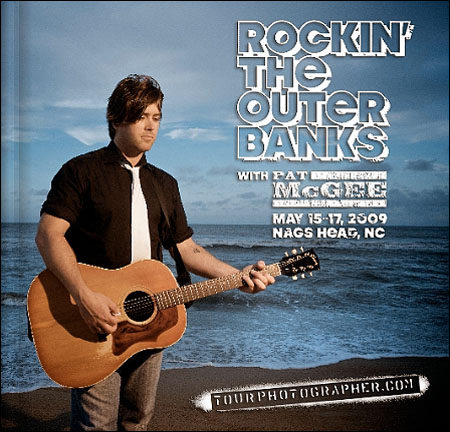
Pat McGee Photo Book: Rockin’ the Outer Banks

As a music fan, one of my favorite things to buy at a concert is the tour book. It usually features a collection of cool photos of the band on stage and behind the scenes.

However, due to the time and expense it normally takes to produce a photo book, the images are usually from old tours or the rehearsals leading up to the show that I saw.

That’s all changed now.

Thanks to print-on-demand technology and Blurb.com, I just produced a 40-page photo book from jam rocker Pat McGee’s first annual “Rockin’ the Outer Banks” concerts in Nags Head, NC. The weekend featured two shows, an intimate brunch gig with Stephen Kellogg, a VIP golf tournament, and a couple of very late nights/early mornings out on the beach.

Pat McGee Rockin' the Outer Banks photo book
(Nikon D3, 14-24, 1/200, F/11, 400 ISO, gelled SB-800 strobe at camera right)

I shot nearly 2,000 images, toned the best photos, designed the book, and made it available for purchase online at TourPhotographer.com within 24 hours.

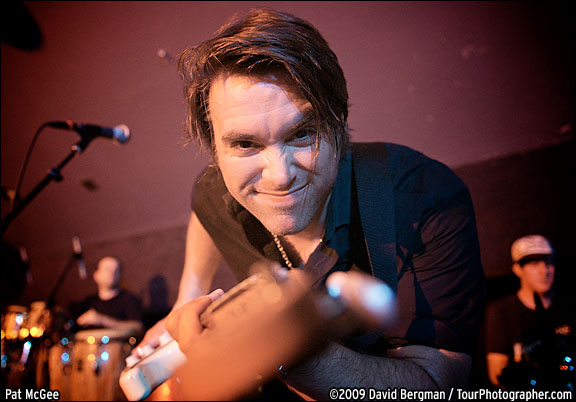
Pat McGee
(Nikon D3, 24-70, 1/250, F/2.8, 2500 ISO, two SB-800 strobes in the crowd w/red and blue gels, one SB-900 on camera dialed down two stops for fill)

Imagine that. Instead of getting the same tour book that’s available in every city, now you’ll be able to buy a book of photos from the show you just attended. And you might even be in one of the shots.

Podcast, PDN Article, and a Live Seminar in NYC

Adorama Photo has a new blog called TechTock and Jack Howard interviewed me for the first podcast. Among other things, I talk about making my inauguration Gigapan, promoting yourself in today’s saturated photo market, my football photo sequence, and Do1Thing.

If you’re reading this via email or RSS, you may not see the embedded flash player above. The direct link is here and you can subscribe in iTunes.

I was also featured in a Photo District News article this month about Gigapan entitled: “Who’s Not Panicking.” Daryl Lang writes about my experience using the technology at the inauguration and how it’s helped the company weather the economic downtown. It’s in the May 2009 PDN on newsstands, but you can also read it online here.

A reminder that I’ll discuss these topics and show some of my work next week (May 20) for a presentation at Adorama in NYC called “Sports, Music, and That Inauguration Photo: Separating Yourself From the pack — An Evening with David Bergman.” It’s a relatively small room and registration is required, so reserve your space at the Workshops@Adorama site today. I hope to see you then.